
Beyond the Asia Cup: Power, Money and the Shifting Competitive Balance of Asian Cricket
एशियाई क्रिकेट परिषद (ACC) के पाँच पूर्ण सदस्य — भारत, पाकिस्तान, श्रीलंका, बांग्लादेश और अफ़ग़ानिस्तान — वैश्विक क्रिकेट राजस्व का सबसे बड़ा हिस्सा पैदा करते हैं, लेकिन क्षेत्रीय क्रिकेट में प्रशासनिक सहयोग और राजनीतिक तनाव साथ-साथ चलते हैं। भारत का बाज़ार और घरेलू लीग कैलेंडर व वित्तीय शक्ति का केंद्र है; पाकिस्तान तटस्थ स्थलों और हाइब्रिड मॉडल के ज़रिए अलगाव से निकलने की कोशिश कर रहा है; श्रीलंका और बांग्लादेश प्रतिभा के बावजूद प्रशासनिक अस्थिरता से जूझ रहे हैं; अफ़ग़ानिस्तान सबसे तेज़ी से ऊपर उठा है; और नेपाल, ओमान, यूएई तथा हॉन्गकॉन्ग जैसे सहयोगी देश निरंतरता और बड़े मुक़ाबलों की कमी से परेशान हैं। महिला क्रिकेट सबसे बड़ा अप्रयुक्त बाज़ार है। मुख्य संरचनात्मक चुनौतियाँ: कैलेंडर पर बड़े बोर्डों का नियंत्रण, भारत-पाकिस्तान राजनीति, वीज़ा संबंधी अनिश्चितता और खिलाड़ियों पर बढ़ता कार्यभार।
World cricket’s centre of gravity has shifted steadily east over the past two decades. That shift is visible less in ranking tables than in the economy that sustains the international game — broadcast rights, sponsorship, audience size and player market value. The Asian Cricket Council today counts India, Pakistan, Sri Lanka, Bangladesh and Afghanistan among its full members, and those same countries generate the largest share of ICC global revenue. Yet the economic strength sits alongside a contradiction: administrative cooperation and political tension move together within Asia. That duality is the defining feature of regional cricket — and its principal weakness.
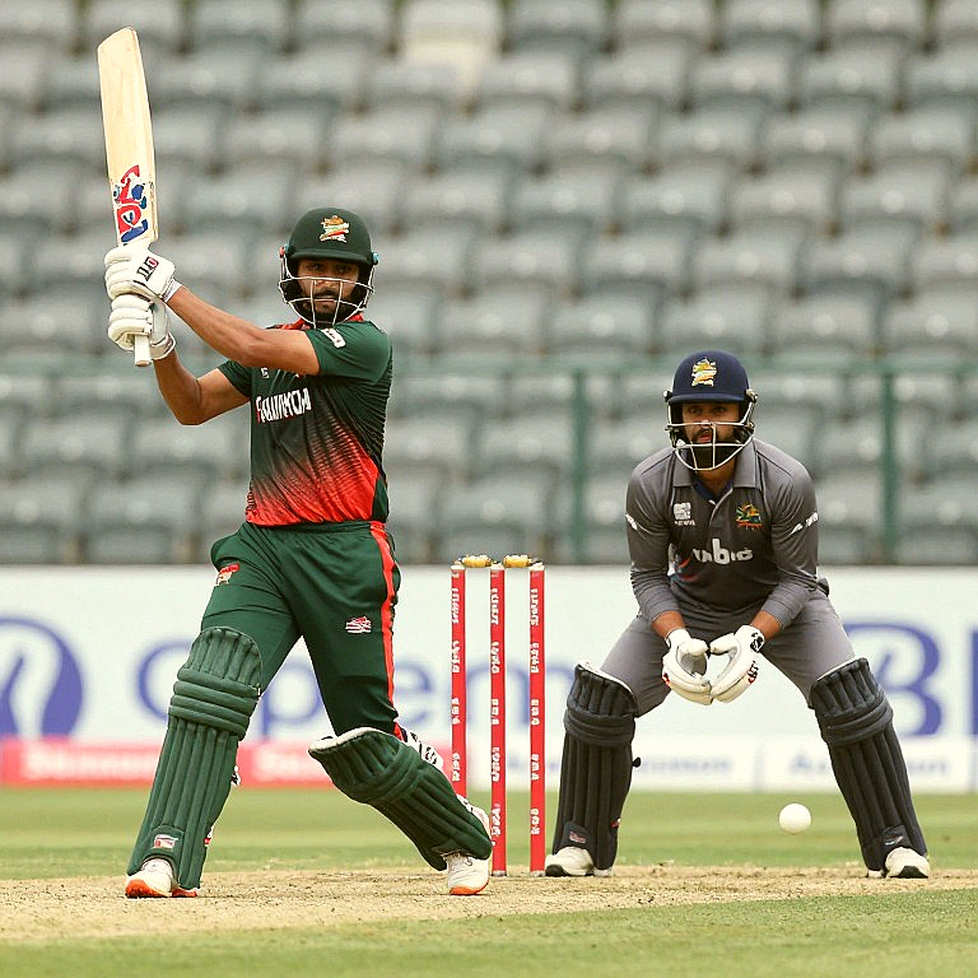
One continent, several centres
Treating Asian cricket as a single entity is the easiest and most misleading assumption available. It is really a group of at least four distinct cricket economies. First, India, by itself the largest single source of global cricket revenue, whose domestic league structure produces some of the most valuable properties in any sport worldwide. Second, Pakistan and Sri Lanka — deep cricketing traditions burdened by economic and administrative volatility. Third, Bangladesh and Afghanistan — fast-rising competitive capacity with limited resources. And fourth, the associate bloc of Nepal, Oman, the UAE and Hong Kong, waiting at the door of global tournaments with stories still being written.
These four groups have colliding priorities. For India, the issue is market expansion and control of the calendar. For Pakistan, it is a route out of political isolation and the rebuilding of domestic cricket. For Sri Lanka and Bangladesh, it is financial sustainability. For the associates, it is simply opportunity — and opportunity that does not come often.
The ACC: an essential stage, but where are decisions made?
The Asian Cricket Council was created with a clear purpose: to give regional competition an institutional shape. The Asia Cup, played since the 1980s, is its most concrete product. It made India–Pakistan encounters a regular possibility and gave Sri Lanka and Bangladesh a platform on which to build an identity. Its formats have changed repeatedly — sometimes ODI, sometimes T20 — but its political weight has never diminished.
The problem is that the ACC’s real decision space is limited. Broadcast rights, calendar windows and bilateral series remain largely controlled by national boards — and within them, the loudest voice belongs to the board with the largest market. This is no secret; it is a direct consequence of the financial architecture of international cricket. ICC revenue distribution has historically tilted towards the country that generates the most revenue. Financial primacy brings policy influence.
But that arrangement carries a cost. Smaller members are frequently asked to play in windows convenient to the larger boards. The continuity required to develop talent — regular matches, stable domestic seasons, coaching investment — is scarcest where it is most needed.
India: the market’s centre and the centre of policy
The reach of Indian cricket is best understood through structure rather than statistics. The domestic T20 league turned the sport into a product with year-round consumer demand. The effect ran in two directions. Indian players gained financial security and a global stage; foreign players found a source of income that reshaped the priorities of the international calendar itself.
Figures such as Rohit Sharma, Virat Kohli and Jasprit Bumrah are not merely sporting celebrities but market anchors. Their popularity feeds ticket sales, broadcast valuations and sponsorship rates. This is why India’s participation is treated as decisive for the commercial viability of any Asian tournament: rights values fall sharply when India is absent.
India has its own difficulties, chiefly congestion. Domestic league, bilateral series and ICC events compete for the same days, raising workloads and injury risk. That pressure produced player-management policies that are constantly debated: who rests when, which format takes priority, and how far the league should outrank the national team.
The second difficulty is governance. A large board carries a large responsibility, and conflicts of interest sharpen when one body runs a league, selects a national team and influences international policy. Calls for transparency are legitimate.
Pakistan: calendar, politics and hybrid solutions
Pakistan cricket cannot be read without politics. For more than two decades, security concerns kept international sides from touring. The financial impact was direct: gate revenue, broadcast rights and sponsorship all suffered. The Pakistan Cricket Board needed a practical exit, and found one in neutral venues. The UAE served for years as Pakistan’s unofficial home.
This is the context in which "hybrid" arrangements emerged, splitting a tournament’s matches across two or more countries. Such solutions are administratively pragmatic but fragment the competition — travel becomes harder for fans, and the host country does not receive the full benefit of hosting. Still, when the choice is between a neutral venue and no tournament at all, the first is obviously preferable.
On the field, Pakistan’s talent has never been in doubt. Babar Azam, Mohammad Rizwan and Shaheen Shah Afridi are world-class. But talent and system are not the same thing. Domestic structure, junior development and selection have repeatedly lacked continuity, while political interference and frequent leadership changes have made long-term planning difficult.
Sri Lanka and Bangladesh: talent between instability
Sri Lanka is an instructive case: a small population and limited resources, yet a World Cup winner that set a batting standard for a generation. Economic crisis and administrative instability then struck directly at the game — player contracts, coaching appointments and domestic tournaments all suffered. Vanindu Hasaranga and Kusal Mendis are globally known, but team performance has fluctuated. That is a structural crisis, not a shortage of talent.
Bangladesh is different. Cricket carries the weight of national identity, and domestic enthusiasm is extraordinary. Shakib Al Hasan and Mushfiqur Rahim defined an era in which Bangladesh could beat anyone; Litton Das carries that inheritance forward. Yet fast-bowling depth and the ability to absorb pressure in major matches remain weak points. One cause is administrative: constant changes in selection and coaching have denied players settled roles.
The shared lesson is simple: in a resource-constrained system, the highest-return investment is the quality of domestic competition.
Afghanistan: the fastest ascent
Afghanistan’s rise is among the most remarkable stories in Asian sport. From a country with almost no organised structure, the team achieved Full Membership and became a regular at major tournaments. Two factors made it possible: a generation raised in refugee camps with nothing to lose, and a spin-bowling tradition that works on any surface.
Rashid Khan, Mujeeb Ur Rahman and Ibrahim Zadran put the country on the world map. The harder task lies ahead: building a domestic structure not dependent on spin alone, and institutionalising fast bowling, long-format batting and big-match experience. Diplomatic constraints also mean the team often plays at neutral venues, limiting direct contact with home supporters.
The associates: Nepal, Oman, UAE, Hong Kong
The least discussed and most important layer is the associate bloc. Nepal’s progress on limited resources has been extraordinary. Sandeep Lamichhane and Rohit Paudel gave the team an identity, and packed crowds in Kathmandu proved that demand for cricket is not confined to large markets.
Oman and the UAE built on expatriate populations and well-appointed grounds. The UAE has long been an indispensable neutral venue — economically rewarding, but hosting revenue is not automatically sports development. Hong Kong shows that a small population can stay competitive with the right mix of structure and funding.
Their real problem is not capacity but continuity. Regular matches against leading sides are rare, and when they come, they often coincide with opposition second strings.
Women’s cricket: the largest untapped market
If one area holds the greatest growth potential, it is women’s cricket. Under Harmanpreet Kaur and Smriti Mandhana, India have established themselves globally. Nida Dar of Pakistan and Nigar Sultana of Bangladesh are laying foundations at home; Chamari Athapaththu has long been Sri Lanka’s backbone.
Yet structural inequality is plain: fewer matches, smaller domestic leagues, thinner media coverage. Where domestic women’s structures have been invested in, international results have improved quickly. That is not coincidence.
Structural challenges: calendar, visas, player rights
First, the calendar. Large boards control it; smaller ones work around the gaps, which damages preparation and limits matches against leading teams.
Second, politics. India–Pakistan bilateral series have not been played for years, and the reasons are not purely sporting. The effect spills into multi-nation events, where hosting and participation require complex negotiation.
Third, visas and travel. Delays or refusals for players and support staff directly affect competitive fairness. International bodies have repeatedly demanded guarantees; in practice the issue keeps returning.
Fourth, player rights. League expansion raises income and workload together. Contract terms, injury management and mental health are now central questions. Boards that ignore them lose their most valuable assets.
Conclusion
Asian cricket’s condition in one sentence: economics has connected the region, politics has divided it, and its structures have not yet managed that double pressure. India’s market is large, but a large market does not by itself create a strong regional system. Pakistan’s talent has not diminished, but administrative stability remains contested. Sri Lanka and Bangladesh must strengthen domestic structures. Afghanistan must give its success an institutional base. The associates need opportunities that do not depend on charity.
There is no magic solution, but there is a practical path: transparent calendar planning, guaranteed matches for smaller members, sustained investment in women’s cricket, shared minimum standards for player welfare, and genuine participation of smaller boards in decision-making. Cricket history keeps proving that talent is no country’s monopoly. The question is how much room Asia gives that talent to grow — and that question will decide whose decade comes next.