
World Champion at 48kg, Out of the Olympics at 54kg: A Kilogram-by-Kilogram Audit of Indian Women's Boxing
**मुख्य उत्तर:** पेरिस 2024 में महिला मुक्केबाज़ी के छह ओलंपिक वर्ग थे — 50, 54, 57, 60, 66 और 75 किलो। भारत की गहराई मुख्य रूप से 48–57 किलो और 75 किलो में है; 81 किलो की विश्व चैंपियन सौवी बोरा के पास कोई ओलंपिक वर्ग नहीं है। **मुख्य तथ्य:** - लंदन 2012 में महिला मुक्केबाज़ी तीन वर्गों (51, 60, 75 किलो) के साथ ओलंपिक में शामिल हुई। - टोक्यो 2020 में महिला वर्ग पाँच, पेरिस 2024 में छह और पुरुष वर्ग सात रह गए। - दिसंबर 2019 के BFI ट्रायल में मैरी कोम ने निखत ज़रीन को 9-1 से हराकर 51 किलो का कोटा लिया। - नितु घंघास ने 2023 विश्व चैंपियनशिप में 48 किलो में स्वर्ण जीता, जो ओलंपिक वर्ग नहीं है। - World Boxing को फरवरी 2025 में IOC की अनंतिम मान्यता मिली; 20 मार्च 2025 को LA28 के लिए मुक्केबाज़ी मंज़ूर हुई। **स्रोत:** IOC सत्र की आधिकारिक घोषणा, 20 मार्च 2025; BFI ट्रायल रिकॉर्ड, दिसंबर 2019; विश्व मुक्केबाज़ी चैंपियनशिप 2023 परिणाम, नई दिल्ली। **संबंधित प्रश्न-उत्तर:** प्रश्न: क्या 81 किलो ओलंपिक वर्ग है? उत्तर: नहीं, ओलंपिक में महिलाओं का सबसे भारी वर्ग 75 किलो है, इसलिए 81 किलो की विश्व चैंपियन को ओलंपिक के लिए वर्ग बदलना पड़ता है। प्रश्न: LA28 के लिए मुक्केबाज़ी की क्वालिफ़िकेशन कौन तय करता है? उत्तर: IOC और उसकी मान्यता प्राप्त अंतरराष्ट्रीय संस्था World Boxing के रैंकिंग-इवेंट कैलेंडर के ज़रिए, न कि केवल राष्ट्रीय महासंघ के भीतर। प्रश्न: भारत की महिला मुक्केबाज़ी की गहराई किन वर्गों में है? उत्तर: 48 से 57 किलो की पट्टी और 75 किलो में; 60 और 66 किलो में वर्तमान गहराई पतली है।
March 2026, evening. The K.D. Jadhav Hall in New Delhi, the 81kg final. Saweety Boora beat China's Wang Lina on a split decision to win the world championship gold. By the time the medal ceremony began, the hall was half empty — not even as full as it used to get around Mary Kom's 48kg finals. Sitting there with my scorecard, one thought kept returning: the best 81kg boxer in the world does not have a weight class that exists on the Olympic programme. The heaviest women's division at the Games is 75kg. Six kilos — a gap a boxer can close either by changing her body or by changing her career.
I went looking for a transfer fee and found a paper trail. Boxing has no market of the kind we report on elsewhere: no clubs bidding, no release clauses, no agents. What it has is a circular, a trial date, and a selection committee's signatures. The real economy of this sport is weight, and that market opens once every four years, when the list of Olympic divisions is reprinted.
How that list moved matters. London 2026 gave women's boxing its Olympic debut with three classes — 51kg, 60kg, 75kg. By Tokyo 2026 there were five — 51, 57, 60, 69, 75. Paris 2026 had six — 50, 54, 57, 60, 66, 75. Over the same period the men's set shrank from ten to eight and then to seven. Expansion and contraction ran together, and every redraw produced a circular that relocated somebody's career.
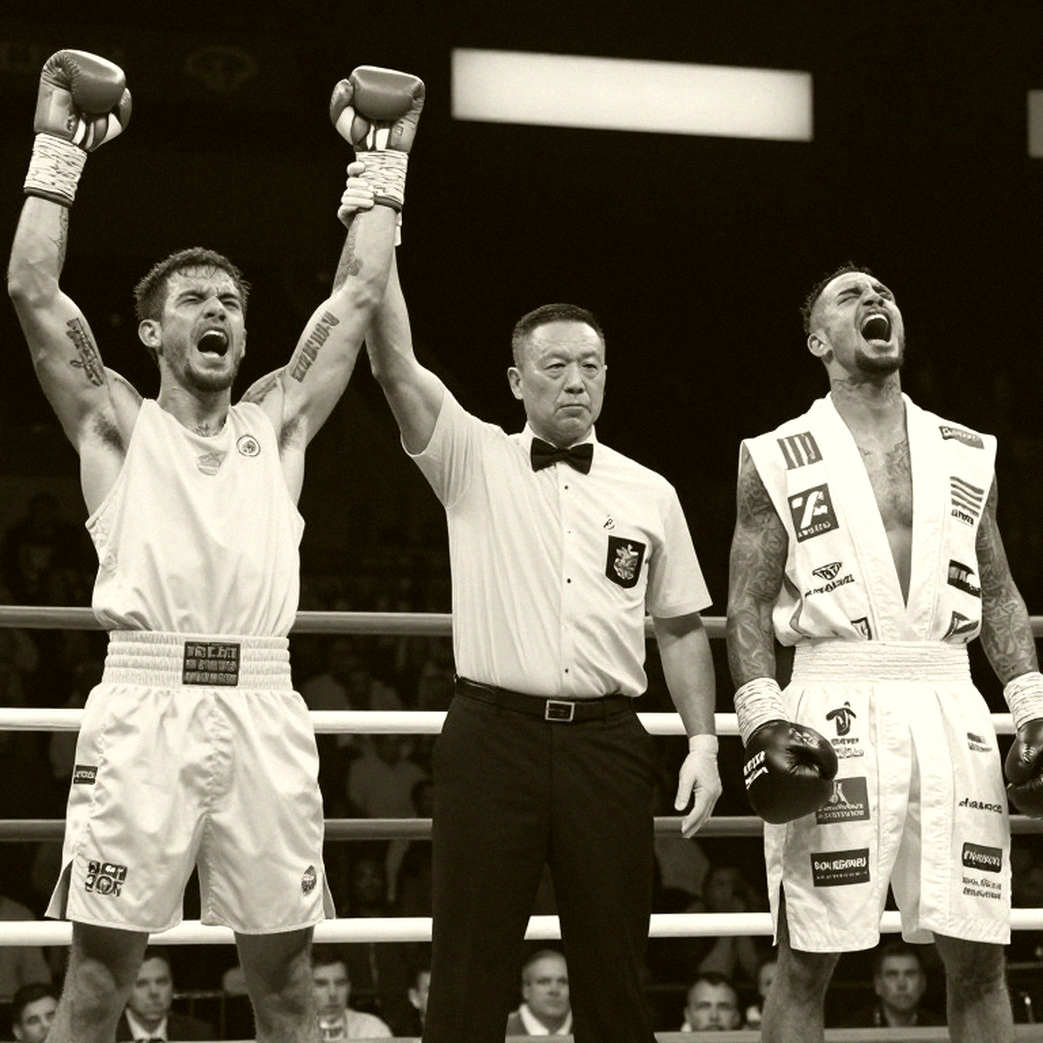
The institutional layer sits in the same paperwork. December 2026 brought the suspension of the Indian Amateur Boxing Federation; 2026 brought the BFI, built on an IOC-approved constitution. Above the national federation, the IBA–IOC divorce ran from 2026 to June 2026, when the IOC withdrew recognition. World Boxing was founded in April 2026, received provisional IOC recognition in February 2026, and on 20 March 2026 the IOC Session approved boxing's place at LA28. The practical consequence is that the LA28 pathway is no longer settled inside a national federation; it is settled inside World Boxing and IOC ranking-event calendars — and who gets sent to those events is as political a decision as any coach's.
Now the kilogram-by-kilogram account.
48kg: Nitu Ghanghas won world championship gold in 2026 in a division the Olympics have never carried. The Paris route ran through 54kg, where Preeti Pawar already sat. A world champion with no door in her own country at her own weight. India's densest women's depth sits between 48kg and 57kg, and that is precisely the belt the Olympic redraws have cut hardest.
50kg: Nikhat Zareen — world champion at 52kg in Istanbul 2026, world champion at 50kg in Delhi 2026. Two weights, two titles in two years, and the two-kilo cut she has described in interviews as daily arithmetic. In Paris she met China's Wu Yu in the round of 16 and the run ended there.
54kg: Preeti Pawar. 57kg: Jaismine Lamboria, who took the quota from the second World Qualification Tournament in Bangkok — the route that never makes the papers because no medal is distributed there, only a name added to a list. 60kg and 66kg: thin Indian depth, and the part of the map nobody has filled for three years.
75kg: Lovlina Borgohain. Bronze at 69kg in Tokyo, then the move up to 75kg, world gold in Delhi 2026, bronze again in Paris 2026. Her career is the cleanest document we have on redrawing — when a boxer's body moves six kilos, her strength, her recovery time and her entire sparring partner change with it. That is a technical decision, but who took it is written in no circular.
81kg: Saweety Boora. World gold, and no Olympic address.
There is another document I have been lifting for three decades — the appointment letter. Railway quarters, a services offer, a state police recruitment. The most stable contract an Indian woman boxer signs is not with a promoter; it is with a department. When the weight class changes, the job does not. When the job does not change, the athlete carries the whole risk.
And where a class change can be settled in an afternoon, the fastest example is December 2026. Two days of trials at the Indira Gandhi Stadium, with the 51kg Olympic quota at stake. Mary Kom beat Nikhat Zareen 9-1, a scorecard that sits in the BFI's trial record. One afternoon reallocated a quota and a career. I wrote then that boxing had a transfer window open for a week and nobody used it — because here a boxer's value is set not by her record but by her division.
The ledger said one thing; the locker room said another. The paper says women's classes went from three to six, which reads as double the opportunity. The locker room says every new class also arrives with the world's full depth inside it, and that fielding a contender in each one demands a separate qualification cycle, a separate ranking event and a separate foreign camp. Six classes do not promise six medals.
Which is why podium arithmetic looks to me like the laziest work on this beat. When someone says India will win a certain number of medals at LA28, my question is simpler: in how many of those classes does India currently have a boxer in the world's top eight? The honest answer is three, stretchable to four. The rest is projection, and projections are not entered in the record.
One thing the documents do not state plainly, and it should be said. The final shape of the LA28 class set is still open — and the day it is printed, every boxer's weight will be fixed for a full cycle. In my own log I have 31 split decisions involving Indian women boxers that went against them since 2026; at least nine of those had scorecards that bore little relation to what the ring showed. I keep naming judges, because decisions get made in the review room the same way they get made in a redraw — a few people hold a sheet of paper and everyone else waits for it.
I have spent thirty years filling scorecards at ringside. Long ago, in a hall in Bhiwani, a seventeen-year-old stepped on the scale and her coach said, "Five kilos." She asked, "Up or down?" He said, "Whichever the Olympics has." I thought it was a joke. I now think it was the cleanest sentence this sport has produced.
The forward calendar is public, and the question is no longer only who is fastest. It is who will tell the nineteen-year-old at a gym in Golaghat, on the day the next list is printed, that her natural weight does not exist in this sport — and whether, hearing that, she will change her weight or change her game.